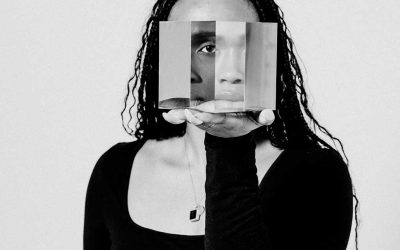

We’re used to treating doubt as a problem — something to overcome, suppress, or fix. But in complex professional lives, doubt is not the enemy. It’s information.
In this series – Rethinking Doubt, I explore the different forms doubt takes — in ourselves, in leadership, and in the systems we’re part of — and how learning to work with doubt, rather than against it, can lead to better decisions, stronger leadership, and more humane organisations.
Doubt has a bad reputation — particularly at work and in leadership. We’re encouraged to be confident, decisive, and certain, especially when the stakes are high. Doubt is something to overcome, suppress, or quietly manage out of sight.
But what if doubt isn’t a flaw in the system?
What if it’s doing important work?
Work we need to surface, partner with, and use constructively to get us to a better place. Rather than deny doubt, we need to talk about it. I call this Professional Doubt.
Professional Doubt is the doubt that we see at play in a professional setting. It might be the doubts we have about ourselves and our ability – imposter syndrome the type of doubt that gets most of our airtime. However, might be doubts external to ourselves, doubts that are driven by specific situations or the wider system.
We see these doubts play out vividly in the film Conclave (2024), based on the novel by Robert Harris, in which a group of senior cardinals gather in the Vatican to elect a new Pope after the sudden death of the previous pontiff. A process that has unfolded for centuries — formal, ritualised, and seemingly certain. And yet, beneath the surface, the film reveals something far more complex: secret conversations, shifting alliances, and a growing undercurrent of unease.
At the heart of the film is Cardinal Lawrence, portrayed by Ralph Fiennes, whose deep faith is matched by an equally deep relationship with doubt. Early on, he delivers a line that quietly reframes everything that follows:
“There is one sin which I have come to fear above all others: certainty. Certainty is the great enemy of unity. Certainty is the deadly enemy of tolerance.”
We see this in organisations, where certainty has become the currency of choice, and yet there is a quiet bubbling underneath the surface – disengagement, a silencing of thinking that disagrees with the norms, new thinking not emerging and silos being created.
As the film unfolds, we watch three distinct forms of doubt weave and dance with one another.
First, there is doubt about the self.
Lawrence questions his own suitability for leadership:
“Firstly, I lack the spiritual depth to be Pope. Secondly, I couldn’t possibly win. A long, drawn-out Conclave would be seen by the media as proof that the Church is in crisis.”
The imposter making his presence felt. This is not performative humility. It is a genuine reckoning with capacity, impact, and stopping him putting himself forward.
Second, there is situational doubt — doubt triggered by something external. The unexpected arrival of a new cardinal, Vincent Benitez, disrupts the process:
“Another cardinal has just turned up. He was never on our list.”
Bringing new questions. Why was he appointed in secret? What don’t we know? What is really happening here? The certainty of the system begins to wobble.
And then there is the deepest layer of all: systemic doubt — doubt about the institution itself. Lawrence names this directly:
“Our faith is a living thing precisely because it walks hand-in-hand with doubt. If there was only certainty and no doubt, there would be no mystery. And therefore, no need for faith. Let us pray that God will grant us a Pope who doubts. And let him grant us a Pope who sins and asks for forgiveness and who carries on”
In this moment, doubt is no longer personal or circumstantial. It becomes essential — the very thing that keeps the system alive.
What makes the film so compelling is not simply that doubt is present, but how it behaves. These three forms of doubt – self, situational, and systemic – amplify one another. Each one sharpens Lawrence’s awareness. Each one draws him further out of the political games being played around him.
And this is where we begin to see the brilliance of doubt.
Lawrence’s doubt does not paralyse him. It propels him. He asks questions others avoid. He investigates rather than colludes. While others are distracted by power and positioning, his doubt places him slightly outside the game – awake to what is unfolding and less vulnerable to being swept along by it.
Importantly, his doubt also makes him more human. As viewers, we connect with him not despite his doubt, but because of it. His uncertainty deepens his integrity and sharpens his effectiveness.
This is leadership – and it is the version of doubt we rarely make space for at work.
Many leaders experience doubt not because they are incapable, but because they are perceptive. Because they sense misalignment. Because something important is shifting — in themselves, in the situation, or in the system they are part of.
The problem is not doubt.
The problem is ignoring it.
When doubt is listened to – rather than rushed away or hidden – it becomes a source of clarity, conscience, and discernment. It keeps us from certainty that is too rigid, too fast, or too self-protective.
Perhaps the question isn’t how to get rid of doubt at work.
Perhaps it’s how we can listen to it and work with it.
I deliberately choose the word Professional, not only to describe where the doubt shows up, but also to invite us to professionalise it. To give doubt recognition and a seat at the table it needs. Not as something that dominates decision-making, but as something we learn to engage with skilfully.
When we professionalise doubt, we gain access to the qualities that it has to offer: curiosity, creativity, courage and collaboration. Doubt becomes active, it begins to move rather than stall. It responds to what is happening – in us, around us, and within the systems we are part of.
This is where the dance comes in.
Self-doubt, situational doubt, and systemic doubt rarely arrive alone. When we ignore the steps of situational and systemic doubt, we overfocus on ourselves and our own uncertainty, which takes us off balance. The three forms of Professional Doubt move together, sometimes awkwardly, sometimes insistently, each one shaping how we step next. When we rush to certainty, we trip over them. When we ignore them, we lose our footing. But when we learn to stay with them to notice the rhythm and adjust our stance they can carry us somewhere more honest and more effective.
This is a dance leaders can learn.
Not one of control or performance, but of awareness, responsiveness, and choice.
And when we allow ourselves to dance with doubt professionally, it gives us the power to move beyond certainty – and towards better leadership, decisions and outcomes.
Photo by Ahmed Odeh @Unsplash.com
#BrilliantDoubt #ProfessionalDoubt #Leadership #Systemicdoubt #impostersyndrome #Situationaldoubt #selfdoubt #leadershipdevelopment