
Questioning Is Where Leadership Begins
Leading well doesn’t require certainty. It requires curiosity, courage and the willingness to question what no longer works.
I help leaders and organisations lead better through uncertainty, using doubt as a source of intelligence rather than something to hide or overcome.
Keynote Speaking > Executive & Team Coaching > The Enneagram

High challenge and high care.
Master Coach (MCC)
High challenge and high care

Trusted By
















Executive and Team Coaching for Leaders Navigating Uncertainty
Uncertainty rarely shows up in just one place. It can sit within us, between people, in the decisions we are making, or in the bigger question of what comes next.
My coaching helps leaders make sense of that uncertainty and use it more intelligently.

Self as Leader
Confidence, self-doubt, identity, authority and the internal patterns that can get in the way of leading well.

High Performing Teams
Helping leadership teams build trust, challenge well, hold each other accountable and perform collectively, not simply as a group of strong individuals.

Systems & Complexity
When the challenge sits beyond the individual or team: competing agendas, stakeholder dynamics, organisational patterns and problems that cannot be solved by applying the old playbook.

Career & What's Next
When you are questioning fit, direction or your next chapter and want to make a considered move rather than simply escape the current one.
Ways We Can Work Together.
Whether you want to deepen your leadership, strengthen your team or shape your next direction - there's a coaching path for you. My work combines coaching mastery, systems thinking and insights into human behaviour with the Enneagram for noticing and widening choice.



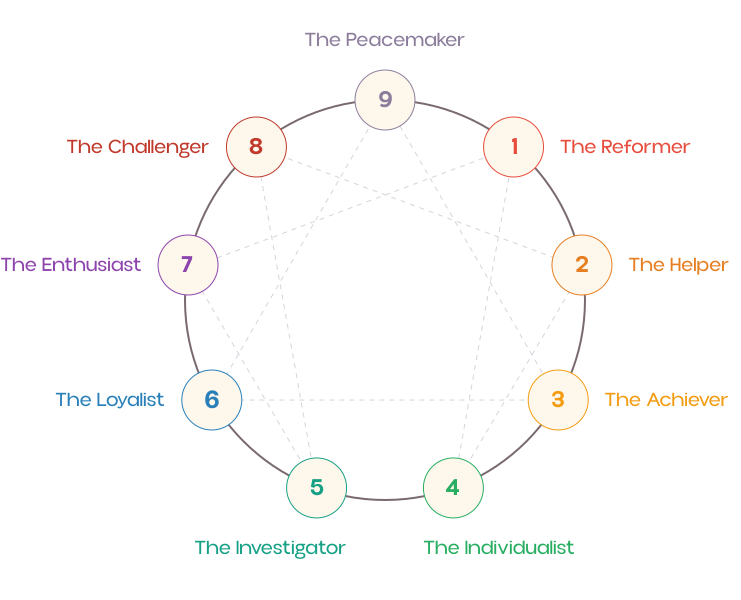
The Enneagram
The Enneagram is a powerful growth tool that helps you understand the deeper patterns that shape your leadership: your drivers, your blind spots and the places where doubt tends to show up.
I use the Enneagram within my coaching services, working one-to-one and with teams to build deeper understanding, stronger relationships, and more effective leadership.
What My Clients Say
Across 15 years of coaching, clients describe this work as a space that brings clarity, confidence and meaningful growth.
Space for transformation
and for the extraordinary to happen.

Brilliant Doubt: The Thinking Behind the Work
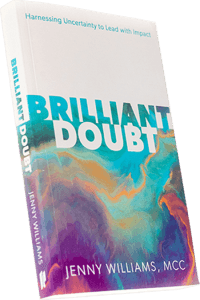
My work is underpinned by the ideas in Brilliant Doubt.
I believe we have confused certainty with leadership. Yet in complex, fast-changing environments, certainty is often impossible. The leaders and teams who navigate uncertainty best are not those who eliminate doubt, but those who know how to use it well.
I call this Active Doubt: the ability to stay curious, question assumptions, notice what others may be missing and still move forward with conviction.
It is this thinking that informs my keynotes, executive coaching and work with leadership teams.
Meet Jenny Williams
Executive Coach, Speaker & Author
I help leaders and teams think more clearly, challenge more intelligently and lead with greater conviction when things are complex, uncertain or messy.
Before becoming a coach, I spent 17 years working at a senior level in marketing and sales, in the UK and globally, including as Creative Director at Nokia. That experience means I understand the realities of leadership from the inside: competing priorities, difficult decisions, organisational politics and the pressure to appear certain when the answer is anything but.
Today, I bring together that corporate experience, more than 5,000 hours of coaching and my work on doubt and uncertainty to help leaders navigate the messy middle, where the old answers no longer quite work and the new ones have not yet become clear.

FAQs
How do I know if I need an executive coach?
Let’s be clear: no one needs executive coaching services. But coaching support can make a real difference when you notice you’re asking yourself bigger, braver questions than usual.
- The Leadership ones: How do I bring people with me — properly, not performatively? What kind of leader am I actually becoming?
- The Impact ones: How do I influence the system I’m in, not just survive it? And how do I make my contribution land where it matters?
- The Personal ones: What is behind my wobbles? Is this still the right path for me? Why does my inner critic have such strong opinions at exactly the wrong moment?
When these questions start circling, leadership coaching offers a space to slow down, zoom out and make choices that feel more intentional — and more you.
What is the difference between executive coaching, mentoring and consultancy?
Although the terms are often used interchangeably, they describe different kinds of support.
- Coaching creates space for thinking. It works through inquiry, reflection and challenge to help individuals or teams develop clarity, judgement and confidence in their own context.
- Mentoring draws on the mentor’s experience, offering guidance and perspective based on having “been there before”.
- Consultancy focuses on diagnosis and solutions, with the consultant analysing a situation and recommending — or implementing — a way forward.
My work is grounded in coaching, while drawing on experience and diagnostic insight where helpful. The emphasis remains on building capability and clarity that clients can carry into future situations.
How do I know which type of coaching is right for me?
The question of which coaching is right often becomes clearer once there’s space to talk about what you’re navigating.
Broadly speaking: Executive coaching is helpful when you’re working with questions of leadership — how you show up, influence others, make decisions and hold responsibility within complex systems, particularly for senior leaders.
Business coaching focuses on the organisation itself — supporting founders and senior leaders to think clearly about strategy, direction, priorities and the practical realities of building or growing a business.
Systemic team coaching teams who want to understand how they’re working together and how the wider system is shaping their performance, particularly where high performance is the goal.
Career coaching is useful during moments of transition, change or uncertainty about what comes next.
Coaching programmes may be short-term and focused, or longer-term engagements, depending on what you are navigating and the depth of support that will be most useful.
A chemistry conversation offers space to explore this together. The focus is less on choosing the “right” label, and more on understanding what will be most helpful for you as an individual or organisation, given your context, questions and goals.
How much does coaching cost?
Coaching isn’t priced as a one-size-fits-all service. The cost depends on a number of factors, including the type of coaching, the context, the length of the engagement and whether it’s for an individual, team or organisation.
Rather than starting with fees, the focus is on understanding what you’re navigating and what will be most helpful. From there, an appropriate scope and approach can be agreed.
A chemistry conversation offers space to explore this and to discuss practicalities openly and transparently. There is no fee for a chemistry conversation.
Do you offer keynote speeches or workshops?
Yes. I speak at conferences and leadership events on doubt, leadership and the human side of organisational life. I also run workshops for senior teams based on the ideas in Brilliant Doubt, helping leaders navigate uncertainty with clarity and confidence.
Latest Thinking Outloud

The Blindspot In Leadership Models: Doubt
Leadership models have...

What leaders can learn from Winter Olympians about doubt
The Winter Olympics is...

Decision-Making Exhaustion: Why Leaders Are Burned Out Before the Decision Is Even Made
Leaders today are...
What if doubt is the beginning?
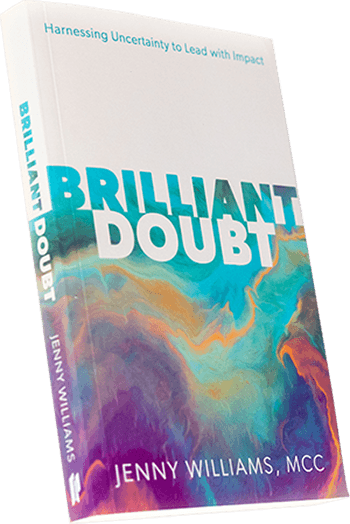
Amazon #1 Best Seller in Business Management & Leadership
What if the real problem isn’t that you doubt yourself – its that no one taught you how to use doubt well? Brilliant Doubt reframes doubt as a critical leadership signal and to turn it into a strategic advantage.