
Executive Coaching for Leaders
Leadership Often Demands Certainty When It's Hardest To Find.
I work with senior leaders navigating greater responsibility, complexity and change.
I bring warmth without collusion and honest challenge, helping leaders think more clearly, navigate uncertainty more intelligently and act with greater confidence and impact.
As an MCC executive coach with more than 5,000 hours of paid coaching experience, I work with leaders in London, across the UK and internationally.
Master Coach (MCC)
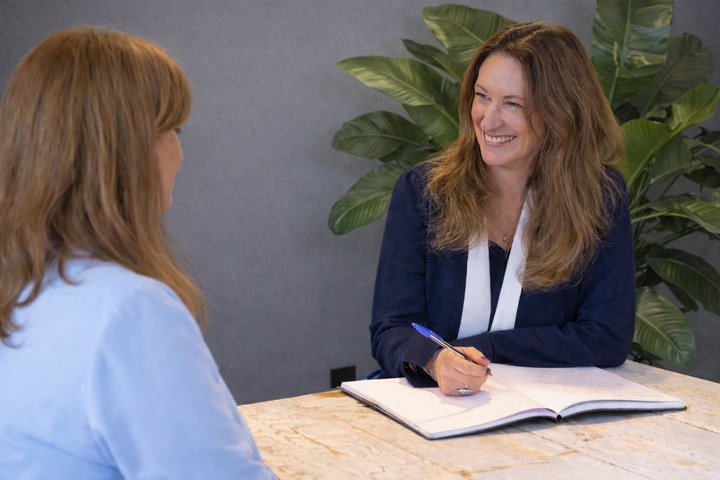

Service Snapshot
- 121 Developmental Coaching Programmes
- Thinking Partner for Senior Leaders
- Leadership 360 Feedback Reports & Debrief
- Personality Profiling with the Enneagram

The Questions That Come With Leadership
Leadership brings questions that don't have quick or obvious answers.
As responsibility grows, so does the uncertainty: about the right decision, your impact, the system around you and sometimes your own capability. Executive coaching creates the space to work with those questions rather than rush past them, so you can lead with greater clarity, confidence and intention.

Leadership Impact
Under pressure, patterns can emerge that shape how others experience you: What impact am I having right now? What choices do I want to make more deliberately?

Influencing the Wider System
Leadership rarely sits neatly within role boundaries: How do I read the system I’m part of? Where do I have influence — and how do I use it wisely as a senior leader?

Confidence, Presence and Gravitas
In more senior roles, confidence can start to feel performative rather than grounded: How do I show up with authority that feels authentic? How do I hold my ground in high-stakes moments?

Leadership Progression
Stepping into a more senior leadership position: What needs to change in how I need to lead now? What’s being asked of me that wasn’t before?


What Becomes Possible
I create a space where senior leaders can think clearly in the midst of complexity — building grounded confidence, making wiser decisions, navigating the systems they are part of and increasing their impact.
I bring together more than 15 years of executive coaching, senior-level corporate experience, systems thinking and deep expertise in human behaviour. I'm interested not only in what a leader is thinking, but in the patterns, relationships and organisational dynamics shaping what is happening around them.
Clients often describe me as a simplicity seeker. I help make sense of the messiness that working in organisations — and being human — inevitably brings, with encouragement, humour and empathy alongside thoughtful challenge.

How It Works

Chemistry Meeting
We start with an initial conversation to explore what you’re navigating, what you want to be different, and whether working together feels like the right fit. It’s a space to ask questions, sense the chemistry, and shape the focus of the executive coaching services.

Setting Up for Success
We begin by agreeing clear coaching objectives and ways of working, including confidentiality and ethics. A kick-off meeting brings the coachee, sponsor and me together to align expectations and ensure the coaching supports both the individual and the wider organisation. Where helpful, this may also include stakeholder feedback or an Enneagram profile to deepen insight and focus the coaching programme.
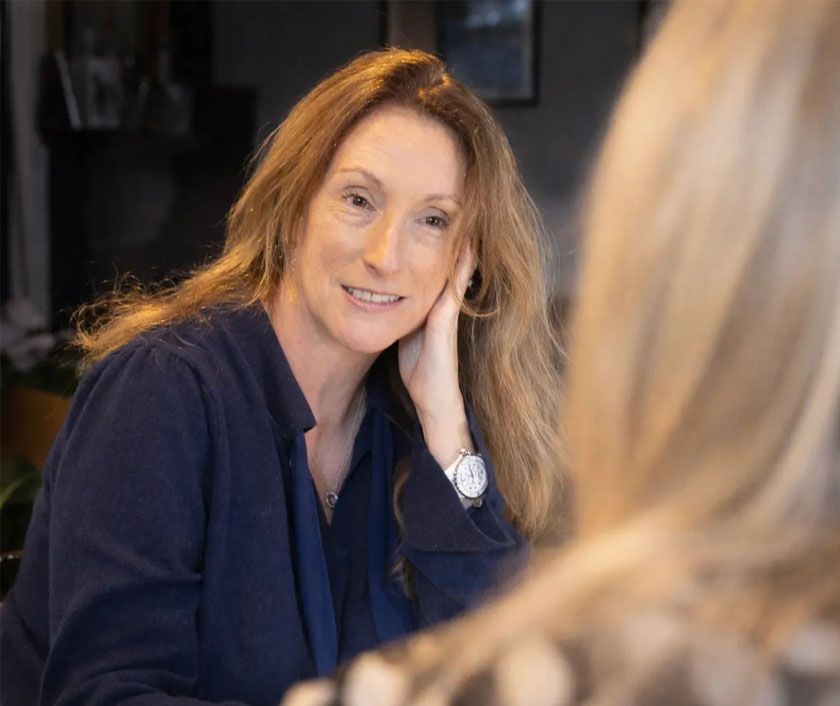
Executive Coaching
Coaching sessions take place face-to-face, by phone or online, usually for 60–90 minutes. Each coaching session focuses on the questions that matter most — turning insight into clarity, confidence and purposeful action. A three-way review at the end offers space to reflect on learning, impact and next steps as part of an ongoing coaching journey.
Leaders Often Notice
As a result of our work together, leaders become better able to work with uncertainty rather than being destabilised by it. They learn to recognise when doubt contains useful information, turn it into inquiry and action, and lead with greater clarity when there isn't an obvious answer. I call this Active Doubt.

Clearer Thinking & Wiser Decisions
Greater clarity in how they make sense of complexity, prioritise what matters and take action with confidence.

Grounded Confidence & Presence
A steadier sense of authority and gravitas — without the need to perform certainty, even in high-stakes situations.

Greater Influence & Impact
Stronger awareness of how their leadership patterns show up within the wider system, enabling more deliberate and effective influence.
Coaching Principles
Do The Right Thing — For The Individual And The Organisation
Coaching needs to work ethically and practically for both the leader and the wider organisation. Throughout the engagement, I pay attention to the system the leader is part of, ensuring the work supports clarity, healthy leadership and meaningful impact.
High challenge, High Care
I balance encouragement, empathy and care with thoughtful challenge. This approach reflects professional coaching practice and creates the conditions to go deep quickly, surface what matters, and turn insight into meaningful change.
Work With What’s Changing
People and organisations are not static. Leadership is messy, particularly in moments of change. The coaching meets that reality; flexing as contexts evolve, while staying grounded in what the work needs now.
Coach For Independence, Not Dependence
The aim of coaching is to build capability, not reliance. I work to make myself redundant — supporting deep, lasting insight that can be applied across different situations and over time. And when a new stretch or transition arrives, you can always return to the work.
What My Clients Say
FAQs
What is a coaching programme?
At its simplest it is a series of conversations that give you time and space to explore your questions, gain clarity and move forward with confidence. We go at your pace. Each programme is tailored to you — your leadership, your team and the impact you want to have.
What can I expect from coaching with Jenny?
My coaching has been described as “high challenge with high care.” We get into the gnarly questions that matter, always with compassion, and always with a little northern humour too. We pause, prod and provoke your thinking, so you can find clarity, strengthen your leadership and take purposeful action.
What difference does it make hiring an ICF MCC coach?
Technically, it means my coaching has been assessed at the highest level recognised by the International Coaching Federation — and I’m re-assessed every three years to make sure I’m still doing what I say I do.
But here’s what it actually means in the room: we get to the heart of things faster, we go deeper without it feeling heavy, and the work tends to create impact sooner rather than later.
Clients often tell me it feels clearer, simpler and more direct — not because I have all the answers, because I know how to get out of your way and help you get to yours.
How confidential is executive coaching?
Confidentiality is the bedrock of my coaching. Without it, honest and meaningful work simply wouldn’t be possible.
What is discussed in coaching sessions remains confidential between coach and client. Where coaching is sponsored by an organisation, confidentiality is agreed clearly and explicitly at the outset through a coaching contract. Typically, this means that themes, progress and outcomes may be shared at a high level, while the content of individual coaching conversations remains private.
This clarity creates the conditions for warmth without collusion - a safe space - allowing leaders to speak openly, reflect deeply and engage in work that is both supportive and appropriately challenging.
Who typically benefits most from executive coaching?
Executive coaching is most valuable for people who are willing to pause, reflect and engage honestly with the questions that come with responsibility.
This often includes leaders who are navigating complexity, increased scope or visibility, significant change, or moments where certainty is expected but not easily found. It can also be particularly helpful for those who want to lead with greater clarity and integrity, rather than relying on habitual or performative confidence.
In practice, coaching tends to work best for people who are curious about their impact, open to challenge, and motivated to do the deeper thinking that leads to more intentional leadership.