
Senior Leadership Team Coaching
Teams Are Shaped As Much By The Systems Around Them As By What Happens Within The Team Itself
What feels like a personal or relational challenge is often created or amplified by the wider organisational context.
Senior Leadership team coaching helps teams understand the systems they are operating within, navigate external pressures, and take collective responsibility for how they work together and the performance that follows.

in Systemic
Team Coaching
In the first 150 to be certified globally

Why Systemic Team Coaching

Teams Often Notice
As a result of our work together, teams notice they have become more than the sum of their individual parts — thinking and working differently together as a result of the senior leadership team coaching.

Clearer Thinking & Wiser Decisions
Through the leadership team coaching, teams become better able to think together — slowing things down when needed, working with different perspectives, and making decisions that are more considered and less reactive, even under pressure.
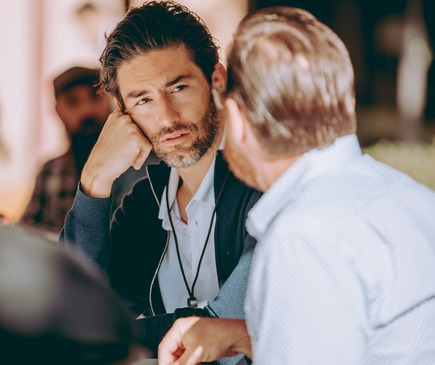
Honest conversations with healthy challenge
Teams grow their capacity to have open, respectful conversations that include healthy challenge.
The issues that matter most are surfaced and worked with directly, reducing unspoken tension and strengthening trust, accountability and collective ownership across leadership teams and team members.

Stronger performance within the wider system
Teams develop a clearer understanding of how the wider system shapes their work including team dynamics and the pressures acting on executive teams.
This supports more effective relationships with stakeholders, better use of influence, and sustainable long term performance.
How I Work With Teams Systemically

How I Work With Teams Systemically
We Talk
We create space for honest, thoughtful conversation about how the team is working: how decisions are made, how relationships are navigated, and how leadership is shared. This is a core part of executive leadership team coaching, with the focus on understanding patterns, not blaming individuals.
We Talk With Data
The work is informed by diagnostic insight gathered up front. This may include stakeholder feedback, team diagnostics or other relevant data, helping ground conversations in evidence rather than opinion and giving the team a shared picture of what’s really going on. From this data, we co-create the focus and structure of the coaching programme together.
We Talk About The Outside
Teams are shaped by the systems they sit within. We bring the wider context into the room — stakeholders, expectations, power dynamics and organisational pressures — to understand how the system is influencing the team’s work.
We Talk About The Elephants
Progress comes from naming what’s usually left unsaid. With warmth without collusion, we surface the conversations that matter most: the tensions, assumptions and dynamics the team may be avoiding or unable to see clearly limiting high performance.
We Talk To Build The Team’s Learning Muscle
Sustainable performance depends on a team’s ability to reflect and adapt. This work supports a longer-term coaching journey, strengthening leadership skills and the team’s capacity to learn together so insight continues long after the coaching ends.
FAQs
How does systemic team coaching work?
Most team coaching focuses on what’s happening inside the team — the dynamics, relationships and ways of working. That matters, of course, but it’s only half the picture.
Systemic team coaching widens the lens. It looks at the team in context — the expectations placed on it, the pressures around it, the stakeholders it serves and the system it operates within. Because a team can only perform as well as the environment its connected to.
The work blends structured conversations with real-time observation. Together, we explore what’s helping, what’s hindering and what needs to shift both within the team and around it to create the conditions for sustainable, collective impact.
How is team coaching different from team building?
Team building typically focuses on activities designed to strengthen relationships or improve morale. It can be useful for connection and bonding, particularly at specific moments.
Team coaching, by contrast, works with the real work of the team. It focuses on how the team thinks, decides, relates and performs over time — and on how the wider organisational system shapes those patterns.
Rather than one-off events, team coaching is an ongoing process that supports teams to learn together, have the conversations that matter, and strengthen their ability to perform well in complex, changing conditions.
Do all the team members need to be bought into team coaching?
No — full buy-in from everyone at the outset isn’t required.
What is important is commitment from the team leader and organisational sponsors to create the conditions for the work to happen. In many teams, levels of enthusiasm, scepticism or uncertainty will naturally vary at the start.
Team coaching often helps build understanding and engagement as it unfolds. As the work focuses on the team’s real challenges and day-to-day realities, people usually see its relevance and value for themselves and the team as a whole.
The aim isn’t forced alignment, but creating enough trust and shared purpose for honest conversation and learning to take place.
Can you coach the leader and the team at the same time?
Yes — and it can be very effective when done thoughtfully.
When I coach a team, the client is the team. The work is contracted with the team as a whole, rather than with any one individual within it. Coaching the team alongside the team leader can strengthen impact, as it allows learning to connect across individual leadership and collective ways of working.
What matters is clarity from the outset about purpose, boundaries and confidentiality. When these are well held, this approach supports shared accountability and more sustainable change — helping both the leader and the team work with the same challenges from different vantage points.