
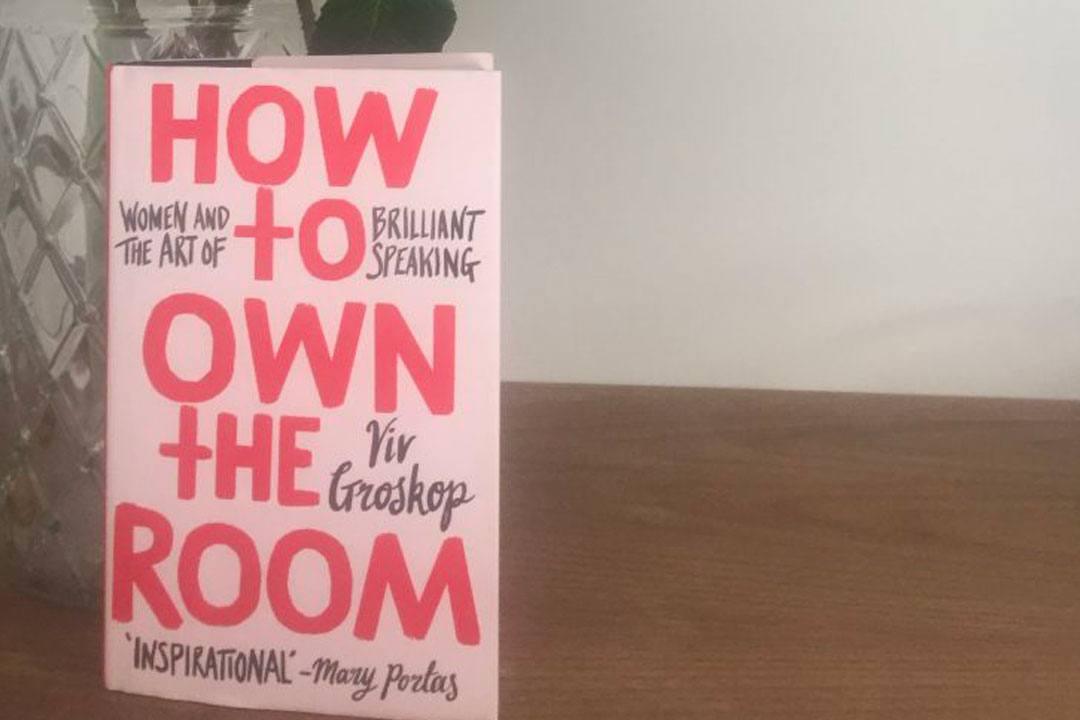
How To Own The Room By Viv Groskop

by | Apr 16, 2019

[dsm_social_share_buttons dsm_view="icon" dsm_skin="framed" dsm_shape="rounded" dsm_alignment="right" dsm_color_type="custom" dsm_custom_bg_color="gcid-ac54d12b-57c7-4fed-8bfc-4a9dcf85c4d1" dsm_custom_color="gcid-6ecfb1db-8411-4825-9054-c771a291c564" dsm_social_hover_animation="dsm-bob" _builder_version="4.27.5" _module_preset="default" z_index="100" global_colors_info="{%22gcid-6ecfb1db-8411-4825-9054-c771a291c564%22:%91%22dsm_custom_color%22%93,%22gcid-ac54d12b-57c7-4fed-8bfc-4a9dcf85c4d1%22:%91%22dsm_custom_bg_color%22%93,%22gcid-6c8d4c3b-a405-4d39-b76c-964ae983afe1%22:%91%22dsm_custom_bg_color__hover%22%93}" dsm_custom_bg_color__hover_enabled="on|hover" dsm_custom_bg_color__hover="#985db3"][dsm_social_share_buttons_child _builder_version="4.27.5" _module_preset="default" global_colors_info="{}" dsm_view="icon" dsm_label="on" dsm_social_hover_animation="dsm-bob"][/dsm_social_share_buttons_child][dsm_social_share_buttons_child dsm_network="linkedin" _builder_version="4.27.5" _module_preset="default" global_colors_info="{}" dsm_view="icon" dsm_label="on" dsm_social_hover_animation="dsm-bob"][/dsm_social_share_buttons_child][dsm_social_share_buttons_child dsm_network="whatsapp" _builder_version="4.27.5" _module_preset="default" global_colors_info="{}" dsm_view="icon" dsm_label="on" dsm_social_hover_animation="dsm-bob"][/dsm_social_share_buttons_child][dsm_social_share_buttons_child dsm_network="email" _builder_version="4.27.5" _module_preset="default" global_colors_info="{}" dsm_view="icon" dsm_label="on" dsm_social_hover_animation="dsm-bob"][/dsm_social_share_buttons_child][/dsm_social_share_buttons]

In How To Own The Room, Viv Groskop explores how you can show up and own your space and in a way that is true to you. You don’t have to be the funniest, most charismatic or wisest person to claim your space. But you do have to claim your space. And the good news is, creating impact is a completely learnable skill.

“People will take their cue from you. That’s it. If you act like you belong in the room, people will believe you do. If you act like your opinion matters, others will too.” Bill Clinton’s press secretary, Evelyn Lieberman

Viv’s book is full of wise words on how to deal with the mind gremlins that can make this hard. Where it challenged me most was to think about how many opportunities to own the room I too easily pass up.  So TED has not called yet, but then they don’t – you apply by submitting a video of you already “owning the room”. There are no TED fairy godmothers watching in the wings to invite you to the next event. I quite like giving talks when I am asked, but I don’t actively seek out the opportunities. Why am I waiting? Viv encourages the reader to see the everyday opportunities that are already there to practice owning the room. Without a plan, it’s easier to sit back.

Here’s my list:

  • Use video on my social feeds related to work – two a month
  • Create two videos about my Home of Wants Coaching Programme and 9 Types of Us Training
  • Attend networking events and proactively present my 60-second elevator pitch
  • When attending talks, ask a question
  • Write a list of subjects that I can talk about.

Talking about topics, I frequently share Caroline Goyder’s (a, if not the, leading voice coach) technique when I am working with clients, to help them prepare in advance what they are going to say. If you are a reflector, or find it hard to put your voice into larger meetings, then doing the following prep beforehand can go a long way. And if you suspect you perhaps talk too much and struggle to land your points, it works equally well. It’s a 5-step process:

  • Headline: What is your angle on the subject matter? Write it in 1-2 sentences.
  • Point 1: State the point simply that supports the headline. Say the biggest point first.
  • Point 2: State the second point second.
  • Point 3: State the third biggest point, if needed – you may only need two points.
  • Wrap: Sum up. Tell them what you have told them, with a twist, or a new perspective, or a question.

As Viv says in her sign-off, the only way to get better is to do it. Thinking is not your friend here, but giving it a go most certainly is.

—–

This is part of the One Point series of blog posts. If you ever finish reading a book, decide you love it, then promptly forget about it… that makes two of us. This blog captures one insight from each non-fiction book that I have read and enjoyed, to act as a conversation starter and a prompt for now and the future. Each post is not a summary of the book, and may not even include the main thrust of it, but they will feature an interesting point that you can quickly digest, bookmark and maybe even share. Check out One Point in Categories.




The Blindspot In Leadership Models: Doubt

The Blindspot In Leadership Models: Doubt

Leadership models have traditionally taught leaders how to project certainty and decisiveness. More recently, frameworks have expanded to include the softer, more nuanced qualities of leadership such as authenticity, adaptability and the creation of psychologically...

read more
What leaders can learn from Winter Olympians about doubt

What leaders can learn from Winter Olympians about doubt

The Winter Olympics is one of the clearest public displays of performance under pressure. Hundredths of a second matter, underpinned by thousands of hours of training. Careers are judged in moments that last less than two minutes. Yet behind the medals sits something...

read more
When Doubt is A Signal from the System, Not the Self

When Doubt is A Signal from the System, Not the Self

In the first three pieces in this series, Rethinking Doubt, I’ve explored doubt as something deeply human: how it shows up in professional life, how it becomes useful when it turns active, and how it often signals an identity in motion rather than failure. This piece...

read more
When Doubt Is a Sign You are Changing, Not Failing

When Doubt Is a Sign You are Changing, Not Failing

We’re used to treating doubt as a problem - something to overcome, suppress, or fix. But in complex professional lives, doubt is not the enemy. It’s information often about who we are becoming. In this series, Rethinking Doubt, I explore the different forms doubt...

read more
Waist Deep in Doubt: How to Make It Work

Waist Deep in Doubt: How to Make It Work

In the first piece in this series, I explored how doubt shows up in professional life - in ourselves, in situations, and in the systems we’re part of. This piece is about what happens next: what it looks like when doubt becomes active. Summer 2025 was not a happy...

read more